Heads up: These apps offer general fitness and posture exercises, not medical treatment. If you have pain, an injury or a medical condition, talk to a doctor or physical therapist first.
The 5 Best Posture Apps in 2026 — We Used Each One Through a Real Work Week
Hours at a desk pull your head forward and round your shoulders. Some apps buzz when you slouch; others give you a routine. We compared the most popular posture apps on what actually helps you sit and stand taller: a short daily routine you'll keep doing.
STBy The shavethat.com Review Desk · Updated November 7, 2026 · 16 min read
Advertising disclosure: we have a business relationship with Alynflow, our #1 pick, and earn money when readers sign up. How this page works.
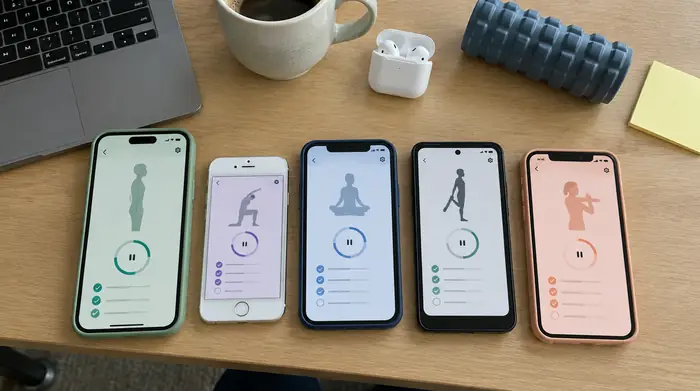
Five phones, five posture apps, one very familiar desk.
Posture apps come in three flavors: ones that alert you when you slouch, ones that hand you a library of stretches, and ones that give you a plan. We used five of the most popular posture apps through full work weeks to see which one actually changes the way you sit and stand day to day, and one clearly stood out.
Quick picks: the best posture apps
Alynflow — best posture app overall (personalized 12-minute daily plan)
Bend — best for general stretching
Align — best for photo posture checks
UPRIGHT — best wearable posture trainer
Posture Pal — best for AirPods slouch alerts
How we tested
We used each app on real workdays and scored six things: how well it personalizes to your posture and desk hours, how clear the guidance is, how much time a day it asks for, how it fits around a workday, how it shows progress, and whether you need to buy extra hardware. We also read public app-store reviews and each app's own description.
The criterion we weighted most heavily: does the app give you a short, progressive daily routine that works the muscles and mobility behind your posture, and fits into a workday? An alert tells you that you're slouching; it doesn't build the strength and mobility that make sitting tall feel easier. The best posture app is the one that tells you exactly what to do today, in a few minutes, and gets a little harder as you get stronger.
Editor's Choice
1
Alynflow
Best posture app overall
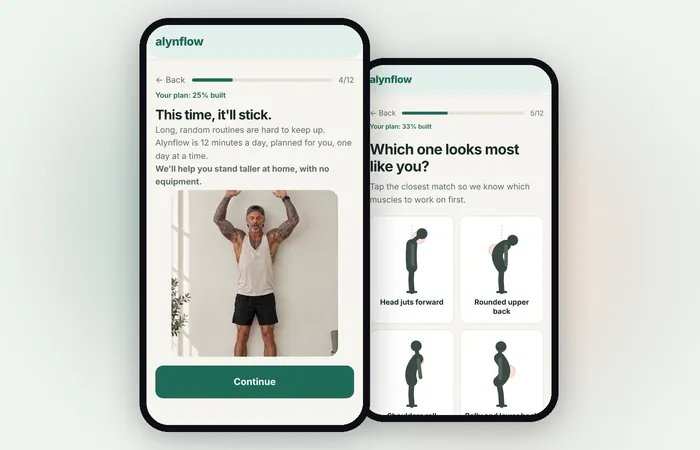
Alynflow starts with a short quiz: how many hours you sit, where you spend your screen time, how active you are, and which posture looks most like yours (head juts forward, rounded upper back, shoulders roll forward). It then builds a personalized 28-day plan of 12-minute daily sessions that gets a little more challenging each week. Every exercise is a follow-along video with Coach Cole, with clear cues and a timer, so you always know what good form looks like. Short 2–3 minute desk-break reminders are scheduled around your workday, and streaks, minutes completed and weekly posture check-ins show your progress. No equipment: just your body weight and sometimes a wall or a chair. That combination, a real routine that fits into a workday, is exactly what our most-weighted criterion rewards.
Pros
Personalized to your posture type, desk hours and activity
12-minute follow-along video sessions with Coach Cole
2–3 minute desk-break reminders around your workday
Progressive 28-day plan, then a new level every month
No equipment, plus a 30-day money-back guarantee and one-click cancel
Cons
Runs in your phone's browser (add it to your home screen), not an App Store download
Newer than the big names, so fewer public reviews so far
No sensor that watches your posture live; it's a routine, not an alarm
Bend is one of the most popular stretching apps around, rated about 4.8 on the App Store from 170,000+ ratings. It offers hundreds of exercises and quick, easy-to-follow routines for all ages, including ones for the neck, shoulders and back. It's a great way to build a daily stretching habit; it's broader than posture, though, so you'll pick the routines that target desk posture yourself.
Pros
Huge library of quick stretching routines
Very well reviewed and easy to follow
Routines for neck, shoulders and back
Cons
General flexibility rather than a posture program
You choose what to do each day
3
Align
Best for photo posture checks
Align: Fix Your Posture (about 4.7 stars from 550+ App Store ratings) analyzes a photo of your posture, can track head tilt through your AirPods, and suggests daily stretches, personalized tips, progress charts and reminders. It's a clever way to see where your posture slips; photo and head-tilt readings are estimates, and the tracking features need compatible AirPods.
Pros
Photo-based posture analysis
AirPods head-tilt tracking
Daily stretches and reminders
Cons
Smaller review base so far
Best features need AirPods; iPhone focused
4
UPRIGHT
Best wearable posture trainer
The UPRIGHT app (about 4.6 stars from 3,900+ App Store ratings) works with the UPRIGHT GO, a small device worn on your upper back that vibrates gently when you slouch. The app adds a tutorial, a real-time posture avatar, daily training goals and stats. Instant feedback is great for awareness, but you need to buy and wear the device, and it focuses on feedback more than exercise.
Pros
Real-time vibration feedback
Builds posture awareness through the day
Daily training goals and stats
Cons
Requires the UPRIGHT GO wearable, sold separately
Feedback-led rather than an exercise routine
5
Posture Pal
Best for AirPods slouch alerts
Posture Pal (about 4.4 stars from 290+ App Store ratings) uses the motion sensors in your AirPods to track neck tilt and alert you in the background with sounds, vibrations, Apple Watch notifications or by lowering your music. Sessions run from 5 to 60 minutes. It's a neat, hardware-free nudge if you already own compatible AirPods, but it alerts rather than trains.
Pros
No extra device if you have compatible AirPods
Works in the background
Flexible alert options
Cons
Alerts only, no exercise program
Apple devices and compatible headphones only
At a glance
Posture apps compared
App
Daily routine
Time per day
Slouch alerts
Extra hardware
Platform · rating
Alynflow
Yes — personalized 28-day plan
~12 min + 2–3 min breaks
Desk-break reminders
None
Browser · iPhone & Android
Bend
Stretching routines
A few minutes, you choose
No
None
iOS / Android · 4.8★ (170k+)
Align
Daily stretches
Varies
AirPods head tilt
AirPods for tracking
iPhone · 4.7★ (550+)
UPRIGHT
Training goals
While wearing
Vibration
UPRIGHT GO wearable
iOS / Android · 4.6★ (3.9k)
Posture Pal
No
5–60 min sessions
AirPods alerts
Compatible AirPods
iPhone · 4.4★ (290+)
Based on our hands-on use and each app's public store listing as of November 2026 (ratings from the US App Store). Features change, so check each app before you choose.
Part 1
Why a posture app helps (when it's the right kind)
Most desk posture problems aren't about willpower. You repeat the same position for hours a day, and over time it starts to feel normal: head drifting toward the screen, shoulders rolling in, upper back rounding. Sitting up straight for ten seconds when you remember doesn't change much. Regular movement and exercise that work the right muscles do, and that's the part a good app makes easy.
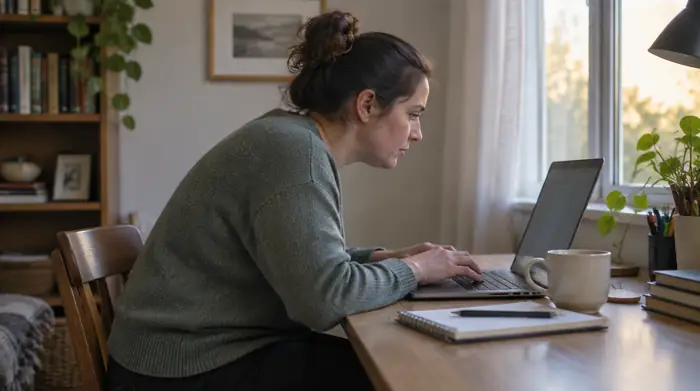
The posture most of us drift into by mid-afternoon.
1. Your posture is a habit you repeat all day
If you sit for six to ten hours a day, your desk position gets more practice than anything else you do. Changing it takes small, repeated actions spread through the week, not one big effort.
2. Reminders alone don't build strength or mobility
Knowing you're slouching is useful, but holding a taller position comfortably takes upper-back strength and mobility in the chest, shoulders and neck. Posture exercise routines commonly focus on exactly those areas.
3. Short and daily beats long and rare
Twelve minutes most days is far easier to keep up than an hour-long session you plan for the weekend. A daily plan removes the decision about what to do and when.
4. Breaking up long sitting matters
Short movement breaks through the workday give your body a change of position. An app that schedules them around your hours makes them actually happen.
5. Seeing progress keeps you going
Streaks, minutes completed and weekly check-ins make gradual change visible, which is what keeps people going past the second week.
6. It fits a real workday
No gym, no equipment, no commute. The best routines can be done next to your desk in work clothes.
Part 2
The problem with most posture apps
Every app on our list can help you notice your posture. The difference is what happens next. Here's where most fall short in day-to-day use:
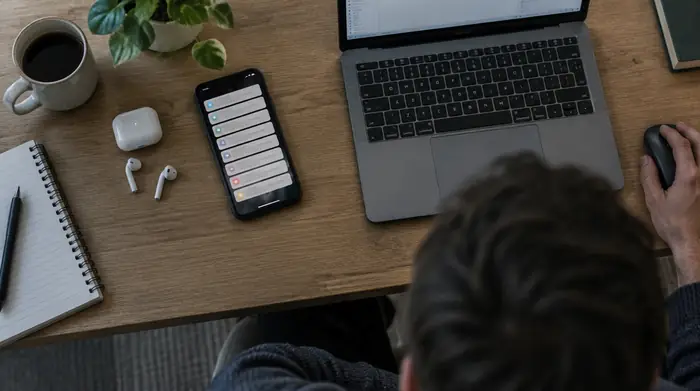
Ten slouch alerts later, still slouching.
01
Alerts without a plan
Buzzes and pings tell you when you've slipped. After a week, many people mute them, and nothing has changed about the muscles that hold you up.
02
A library instead of a program
Hundreds of stretches are great to browse. But "what should I do today, for my posture?" is the question that matters, and a library leaves it to you.
03
Extra hardware
Wearables and headphone tracking can work, but they cost extra, need charging and pairing, and often end up in a drawer.
04
Not built for a workday
Long routines that need a mat and 40 minutes don't fit between meetings. Desk workers need short sessions and even shorter breaks.
05
No progression
Doing the same three stretches forever gets boring and stops being challenging. A good plan gets a little harder each week.
GIFIllustration: three short desk breaks and one 12-minute session add up to about 19 minutes of movement in a desk day.
That's the idea behind Alynflow: one 12-minute follow-along session a day, built around your posture type, plus 2–3 minute desk breaks scheduled around your workday, all getting a little harder week by week. It's the main reason it ranks #1 here.
Part 3
What happens without a plan: four everyday examples
Please note: these are illustrative examples, composites of situations desk workers commonly describe. The people and names are invented. They are not testimonials or endorsements, and they don't describe typical results.
End-of-day stiffness after a long stretch at the laptop.
Example A · "Maya"
The muted reminder
Situation: Maya set up slouch alerts and felt great about it for three days.
What went wrong: by day five the alerts fired during every meeting, so she muted them. She still had no routine for the muscles that make sitting tall easier.
What a plan changes: a short daily session she can do before logging on, plus a few scheduled 2-minute breaks instead of constant pings.
Example B · "Daniel"
The once-a-week stretcher
Situation: Daniel does one long stretching session on Sunday and sits for ten hours a day the rest of the week.
What went wrong: one big session can't make up for six days of the same position, and it's the first thing he skips on a busy weekend.
What a plan changes: twelve minutes on most days and short breaks during the workday, spread across the week where the sitting actually happens.
Example C · "Leah"
The couch-laptop worker
Situation: Leah works from the couch with her laptop on her knees, head down for hours.
What went wrong: she didn't notice how far forward her head had been until the end of the day, when everything felt tight.
What a plan changes: a few simple setup tips, scheduled movement breaks, and exercises chosen for a forward-head posture type.
Example D · "Chris"
The gadget in the drawer
Situation: Chris bought a posture wearable and loved the instant feedback.
What went wrong: charging it, pairing it and remembering to put it on got old after two weeks. Now it lives in a drawer.
What a plan changes: nothing to wear or charge, just a daily session on his phone and a streak he doesn't want to break.
Part 4
When to start using a posture app
The best time is before stiffness becomes your normal, but it's never too late to start moving more. These moments matter most:
When you start a desk job or go remote. New routines are the easiest time to build good habits.
After a long stretch of deadlines. Weeks of extra sitting are a good moment to reset.
When you notice it on camera. If your head looks forward or your shoulders rounded on video calls or in photos, that's your cue.
When your workspace changes. A new laptop, desk or home office changes how you sit.
When you're getting back into exercise. A short, structured routine is an easy on-ramp. Check with your doctor first if you have pain or a condition.
When you spend more time on your phone. Long scrolling sessions pull your head down and forward too.
When you want a habit that sticks. A plan with a streak is easier to keep than good intentions.
Part 5
How to use a posture app: the 12-minutes-a-day routine
You don't need hours. Here's the simple routine we recommend after testing all five apps:
1
Set it up once (about 2 minutes)
Tell the app about your day: desk hours, activity and where your posture slips most. In Alynflow this is a short quiz that builds your 28-day plan.
2
Every day: one 12-minute session
Same time each day, next to your desk or at home. Follow along slowly and with control.
3
During the day: 2–3 minute breaks
Stand up, open your chest, roll your shoulders. Schedule them around your meetings so they actually happen.
4
Tweak your setup
Screen near eye level, feet supported, laptop on a stand with a separate keyboard if you can. Small changes add up.
5
Once a week: check in
Log how sitting and standing feel. Let the plan step up when the moves start to feel easy.
GIFScreen recording: Alynflow's setup quiz.
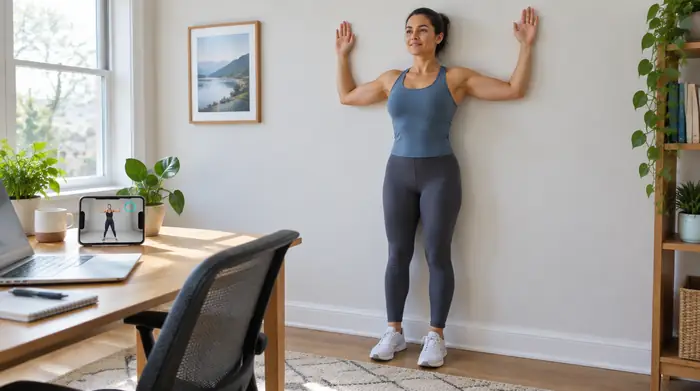
A follow-along session next to the desk.
Tips that make it stick
Anchor it to something you already do. Before your first meeting, after lunch, or when you close the laptop.
Slow and controlled. Good form beats more reps.
Breathe. Don't hold your breath during holds.
Stop if it hurts. Mild effort is fine; sharp pain, numbness or tingling is not. Check with a professional.
Give it a few weeks. Habits and strength build gradually, so judge progress by weeks, not days.
Important
What a posture app is NOT
Posture apps are useful tools, but it's important to be clear about what they don't do, including Alynflow and every other app on this page:
✕ Not medical treatment
These are general fitness and wellness products. They don't diagnose, treat or cure any condition, including back or neck conditions.
✕ Not a doctor or physical therapist
If you have pain, numbness, tingling, an injury or a medical condition, talk to a doctor or physical therapist before starting any exercise program.
✕ Not a guarantee
No app can promise results. Everyone's body is different, and progress depends on consistent practice.
✕ Not an overnight fix
Posture habits form over years. Expect gradual change from regular movement, not a quick transformation.
✕ Not a precise measurement
Photo analysis, head-tilt tracking and posture scores are estimates to guide you, not clinical assessments.
✕ Not a brace or medical device
None of the apps here are medical devices. Wearables like UPRIGHT GO are sold separately and are training aids.
✕ Not free forever
Most of these apps are subscriptions that renew automatically. Read the price, renewal terms and refund policy at checkout, and cancel anytime you need to.
✕ Not affiliated with each other
Bend, Align, UPRIGHT and Posture Pal are trademarks of their owners; AirPods and Apple Watch are trademarks of Apple Inc. None of them sponsors or endorses this page.
FAQ
Posture app questions, answered
What is the best posture app?
In our testing, Alynflow is the best posture app for most desk workers because it builds a personalized 28-day plan of 12-minute follow-along sessions, adds short desk-break reminders around your workday, and needs no equipment. Bend is a strong alternative if you mainly want general stretching routines.
How much does Alynflow cost?
The quiz is free. Alynflow's plans are paid subscriptions; the "50% off" button applies its introductory offer for the first billing period. Plans renew automatically at the regular price unless you cancel, which you can do in one click online. Alynflow offers a 30-day money-back guarantee. Check the current price and terms at checkout before you subscribe.
Does Alynflow work on iPhone and Android?
Yes. It runs in your phone's browser, so there's nothing to download, and you can add it to your home screen so it opens like an app.
Do I need any equipment?
No. Alynflow's exercises use your body weight and sometimes a wall or a chair. UPRIGHT needs its wearable, and Align and Posture Pal use AirPods for their tracking features.
How long does it take each day?
Most Alynflow sessions take about 12 minutes, and desk breaks take 2–3 minutes.
Can a posture app fix back or neck pain?
No app can diagnose or treat pain. If you have pain, an injury or a medical condition, please see a doctor or physical therapist. Posture apps are for general fitness and everyday habits.
Do I need a posture corrector or brace?
Not for a routine like Alynflow. If you're considering a brace or device, ask a healthcare professional whether it's right for you.
The bottom line
Every app here can help you notice your posture. Bend is great for general stretching, Align for photo check-ins, UPRIGHT for real-time wearable feedback, and Posture Pal for AirPods alerts. But if you want a plan built around your desk day, 12 minutes of follow-along exercises plus short desk breaks that get a little harder each week, Alynflow is our pick for the best posture app. Start with its free quiz.